The Forging Frontier: PT MetalArt Astra Indonesia’s 10-Million Unit Capacity Strategy
The Indonesian automotive component landscape is undergoing a massive transformation, driven by strategic joint ventures aimed at deep localization. At the heart of this movement is PT MetalArt Astra Indonesia (MAI), a high-stakes partnership designed to secure domestic supply chains for critical engine and chassis parts. By focusing on precision forging, this initiative significantly reduces Indonesia’s historical reliance on imported components for the four-wheeler (4W) Original Equipment Manufacturer (OEM) market.
Strategic Synergy: The $45.3 Million Forging Investment in Karawang
The establishment of the MAI facility represents a major financial and technological commitment to Indonesia’s industrial sector. Backed by a total investment of $45.3 million (approximately 3.7 billion Yen), the plant spans a 3.2-hectare site within the Karawang International Industrial City (KIIC) in West Java. This strategic location offers exceptional logistical advantages, placing the facility in close proximity to major 4W vehicle assemblers across the region.
The corporate structure of the venture highlights a strong transfer of advanced manufacturing expertise. MetalArt Corporation holds a 70% majority stake, while Astra Otoparts holds the remaining 30%. This 70/30 equity split facilitates the seamless integration of Japanese precision forging technologies into local operations, building upon a longstanding relationship that began when MetalArt first provided manufacturing technology licenses to Astra’s affiliate, PT Menara Terus Makmur, back in 1996.
“Pembangunan pabrik baru MAI ini menelan biaya investasi sebesar 3,7 miliar Yen, yang berdiri di atas lahan seluas 3,2 hektar,” noted Robby Sani, Director of Astra Otoparts.
Component Deep-Dive: Crankshafts and Connecting Rods for the OEM Market
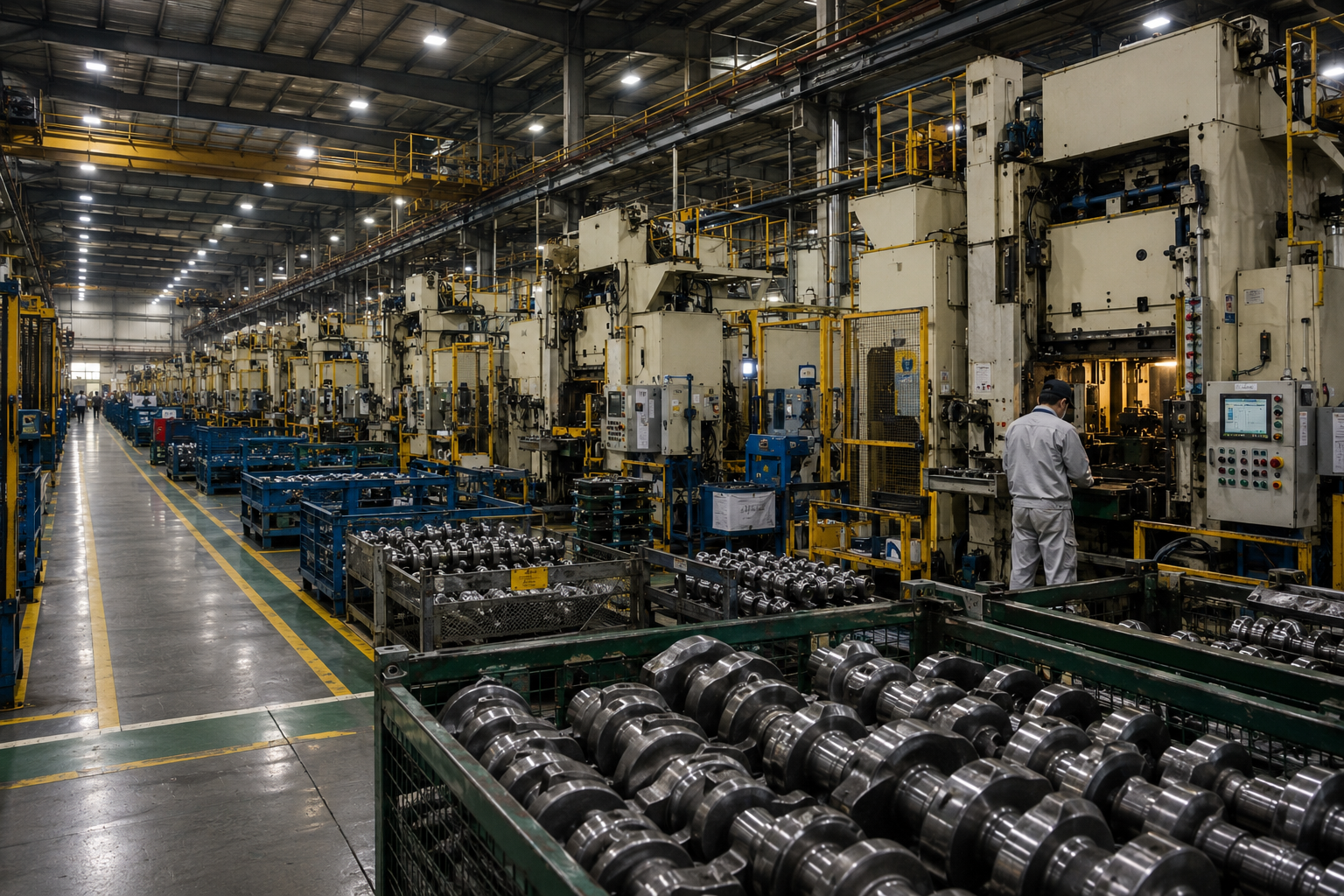
Officially inaugurated on October 21, 2014, by top executives from both parent companies, the Karawang plant was engineered to produce high-stress powertrain components that demand exceptional structural integrity. MAI’s production portfolio centers around three major automotive components: crankshafts, connecting rods, and propeller shafts.
The factory boasts a massive annual design capacity, capable of rolling out 2.25 million crankshafts, 4.56 million connecting rods, and 3.84 million propeller shafts. By producing these vital elements locally, MAI directly displaces imports that traditionally came from regional hubs like Japan or Thailand. This localized production aligns directly with national industrial goals to elevate Local Content Requirements (TKDN) and strengthen the domestic automotive supply chain.
Scaling for Success: Navigating the Path to 8.7 Million Units
Ramping up production from initial estimates of 60,000 units during the 2014 launch phase to an ambitious target of 8.7 million units by 2017 required sophisticated engineering and rigorous quality control. The facility utilizes heavy hydraulic presses and advanced thermal treatment lines to ensure that every forged part meets strict international automotive standards.
“Dengan hadirnya pabrik ini, akan semakin melengkapi produk-produk spareparts Astra Otoparts dalam rangka mencapai visi, yaitu menjadi supplier komponen otomotif kelas dunia sebagai mitra usaha pilihan utama Indonesia,” added Robby Sani.
This rapid scaling has redefined the competitive environment for local Tier-1 and Tier-2 suppliers. By bridging the gap between raw steel input and finished precision parts, MAI ensures that vehicle manufacturers operating in Indonesia have secure, reliable, and cost-effective access to essential engine architecture without facing the lead-time vulnerabilities of overseas shipping.
Beyond Forging: MetalArt Astra Indonesia’s Role in the Global Supply Chain
The success of PT MetalArt Astra Indonesia serves as a benchmark for how foreign partnerships can successfully elevate local manufacturing capabilities. Supported by Astra Otoparts’ broader competencies—which span material evaluation, advanced engineering design, and custom durability testing—MAI is positioned far beyond a simple production site. It operates as a vital technological node within Southeast Asia’s industrial network.
As the automotive sector continues to evolve toward higher efficiency and stricter environmental compliance, localized facilities like MAI provide the foundational strength required for long-term industrial resilience. Through continuous technological refinement and an unwavering focus on quality, the joint venture ensures that Indonesia remains a powerhouse in automotive component manufacturing for years to come.