SLB Acquires S&P Global Energy Software – ROI in Asian Steel Green Transition
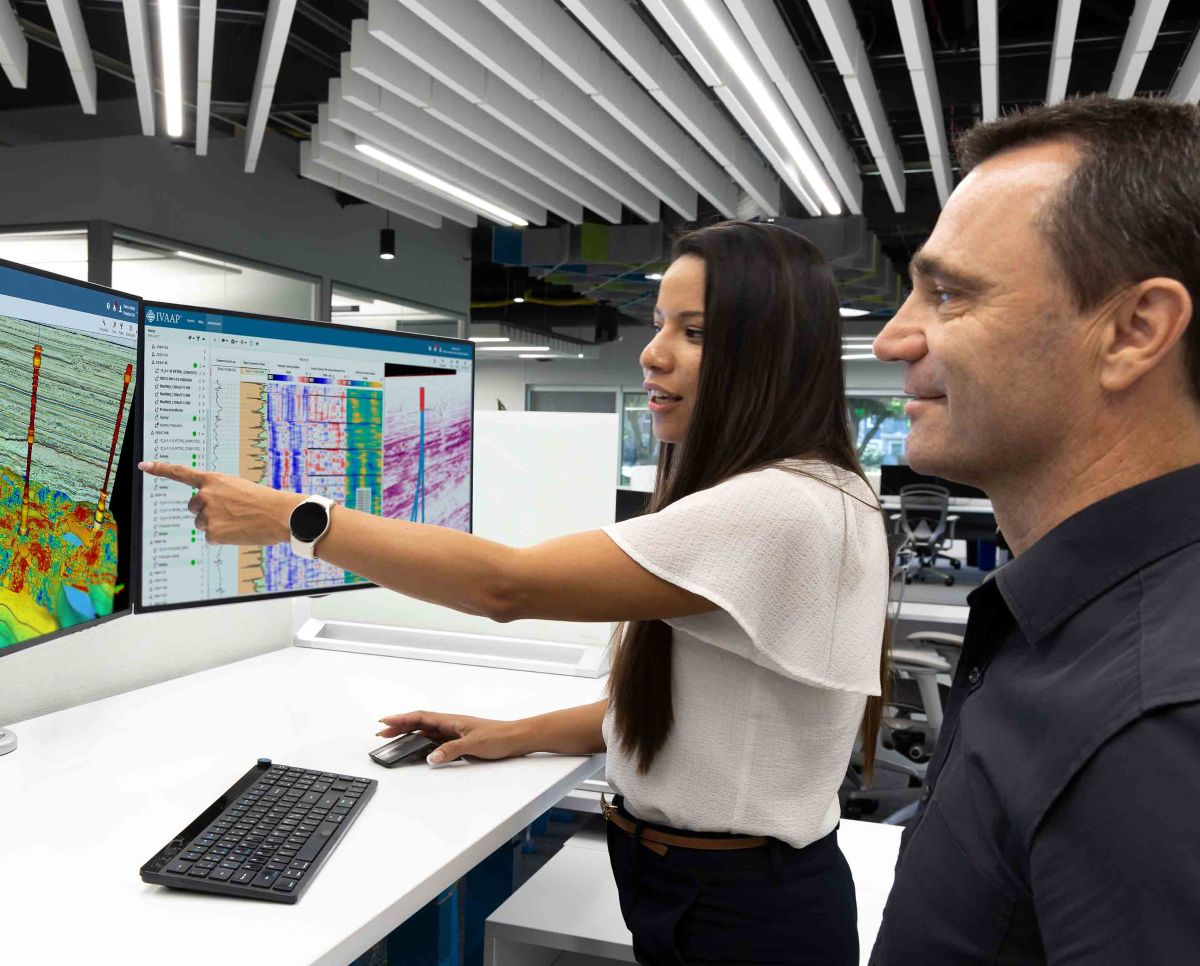
The global steel industry is navigating a pivotal intersection of decarbonization mandates and volatile input costs. For institutional investors and steel mill executives, the recent integration of advanced digital twins and agentic AI platforms—highlighted by SLB’s strategic software expansions—is no longer a “future-tech” luxury but a fundamental driver of EBITDA protection. In the high-growth corridors of Asia, particularly Indonesia, the deployment of real-time operational dashboards is projected to deliver a digital ROI of up to 457% over a three-year horizon.
The Executive Perspective: Quotes on Digital Transformation
Industry leaders are increasingly vocal about the mechanical necessity of digitalization to maintain a competitive capex-to-output ratio:
- Aditya Mittal, CEO of ArcelorMittal:“Our focus is CBAM and trade. To the extent that the free allowances get extended, that’s net positive… however, the precondition is really appropriate trade action and appropriate CBAM policy.”View Full Statement
- T.V. Narendran, CEO & MD of Tata Steel:“Strong operations, cost take-outs, and volume resilience helped cushion the quarter… [as we navigate] domestic demand and safeguards.”Watch Interview
- Thomas Kurian, CEO of Google Cloud (on Industrial AI):“This almost certainly is the fastest technological transformation we’ve seen… Production AI and agentic systems are now deployed in meaningful ways across virtually every organization.”Read Full Analysis
Global Steel Production: The 2026 Statistical Landscape
The efficiency gap between traditional integrated mills and modern recycling-based facilities remains the primary determinant of energy intensity (GJ/tonne). According to the 2025 Sustainability Indicators, the global average energy intensity for crude steel stands at 20.95 GJ/tonne, yet the divergence between production routes is stark:
| Metric | BF-BOF Route | Scrap-EAF Route | DRI-EAF Route |
| Energy Intensity (GJ/tonne) | 23.88 | 9.84 | 19.45 |
| CO2 Intensity (tCO2/tCS) | 2.34 | 0.69 | 1.47 |
| Scrap Utilization Rate | ~10-15% | >70% | <30% |
| Material Efficiency | 97.6% | 92.8% | 93.1% |
Regional Trade Flows and Tonnage
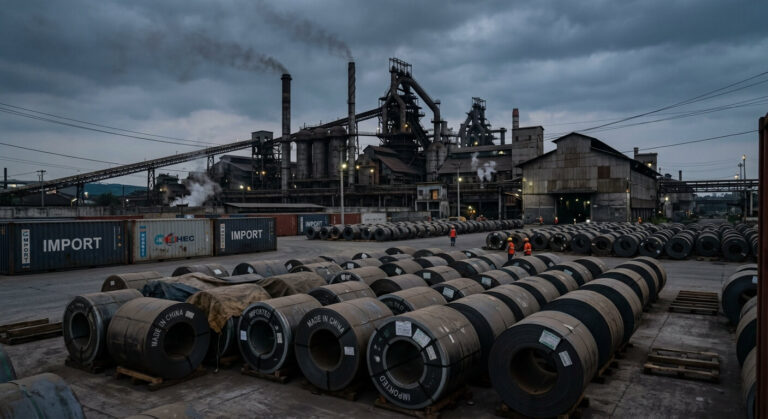
In February 2026, global crude steel output reached 141.8 million tonnes (Mt). While China remains the dominant producer at approximately 960.8 Mt annually (a slight 4.4% contraction from 2024), the focus for commodity traders has shifted to Southeast Asia. Indonesia, specifically, is seeing a surge in EAF capacity to meet the domestic infrastructure demand generated by the Nusantara capital project and the RPJMN 2025-2029 development plan.
ROI Projections: Digital Impact on EBITDA
For a mid-sized mill producing 5 Mt annually, the implementation of SLB-caliber software suites targeting furnace optimization and predictive maintenance yields measurable fiscal gains.
- Energy Cost Reduction: By optimizing the melt cycle in EAFs, AI-driven setpoints reduce electricity consumption by 4-7%. In regions with high industrial tariffs, this directly impacts the bottom line within 12 months.
- Yield Improvement: Real-time monitoring of DRI yield and slag chemistry reduces material waste, contributing to a 1.5% increase in ARR through higher throughput of prime-grade slabs.
- Maintenance De-risking: Predictive analytics reduce equipment failure frequency by up to 40%, significantly lowering the capex required for emergency replacements.
Projected Financial Outcomes (3-Year Timeline):
- Year 1: Integration and baseline mapping; 5-8% reduction in Opex.
- Year 2: Full agentic automation; 12-15% EBITDA uplift.
- Year 3: Supply chain synchronization; cumulative ROI of 450%+.
Regional Spotlight: Indonesia Infrastructure Demand
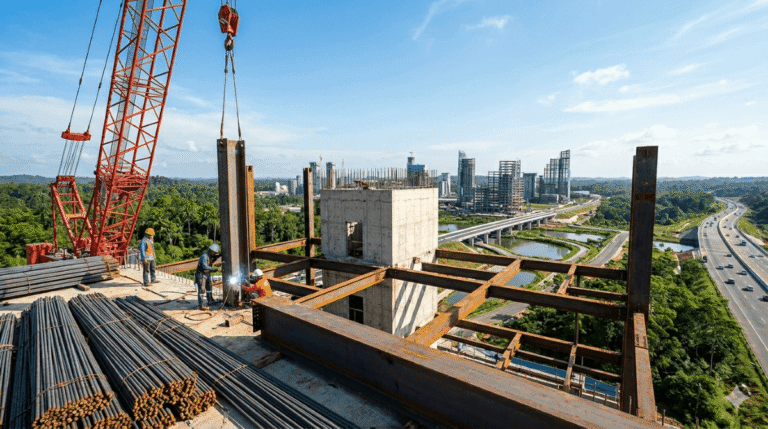
The Indonesian infrastructure market is a primary catalyst for regional steel demand, expected to grow from USD 101.22 billion in 2025 to USD 106.89 billion in 2026, maintaining a CAGR of 5.6% through 2031.
The strategic shift toward high-strength low-alloy (HSLA) steels and specific long products for seismic-resistant construction in the new capital (Nusantara) has forced a re-evaluation of procurement strategies. Procurement directors are increasingly looking at “Digital Green Steel”—tonnage produced in mills where energy intensity is monitored via transparent, auditable digital twins.
Strategic Implications for Commodity Traders
The integration of software like SLB’s S&P acquisition into the broader steel ecosystem allows for a new level of “Energy-Adjusted Pricing.” Traders can now hedge against energy price volatility in Asia by evaluating the energy intensity (GJ/tonne) of specific suppliers in real-time.
As scrap utilization rates increase globally to meet Scope 3 emissions targets, the ability to track the “carbon pedigree” of a steel billet becomes a value-added service that justifies a premium over standard benchmarks. The impact of the SLB S&P software suite is thus two-fold: it provides the technical telemetry to lower costs at the mill level and the financial transparency required by institutional investors seeking ESG-compliant commodities.
The New Alpha in Steel
The steel manufacturing sector is no longer just about “tonnage and tension.” It is about data density. The companies that successfully integrate AI-driven dashboards to manage their EAF capacity and energy inputs will outperform the market by a significant margin. For the procurement director, the ROI is found in price stability; for the executive, it is found in the 15-25% digital impact on energy-related costs that preserves margins in a decarbonizing world.