Indonesia’s 100 Million Ton Steel Ambition
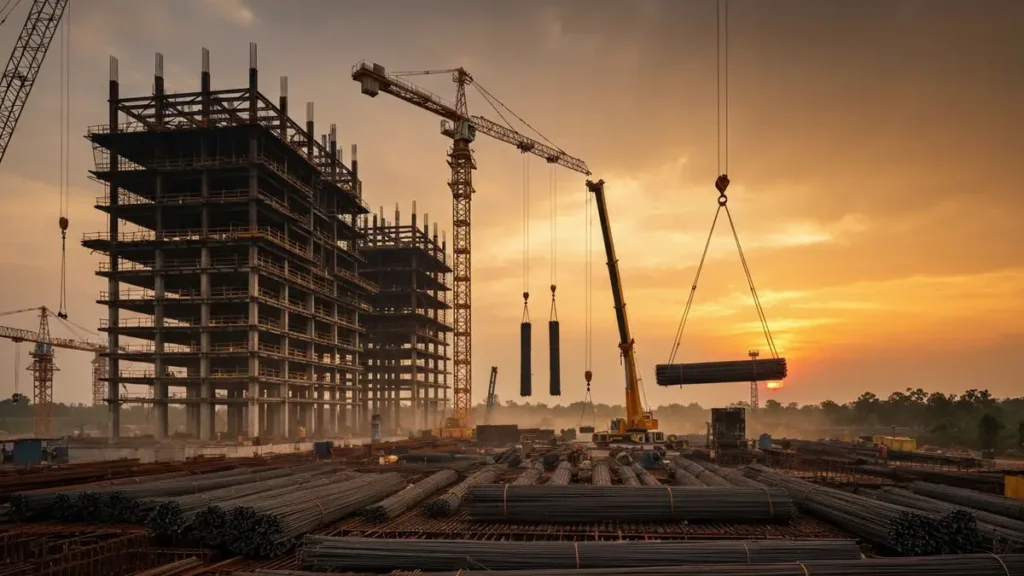
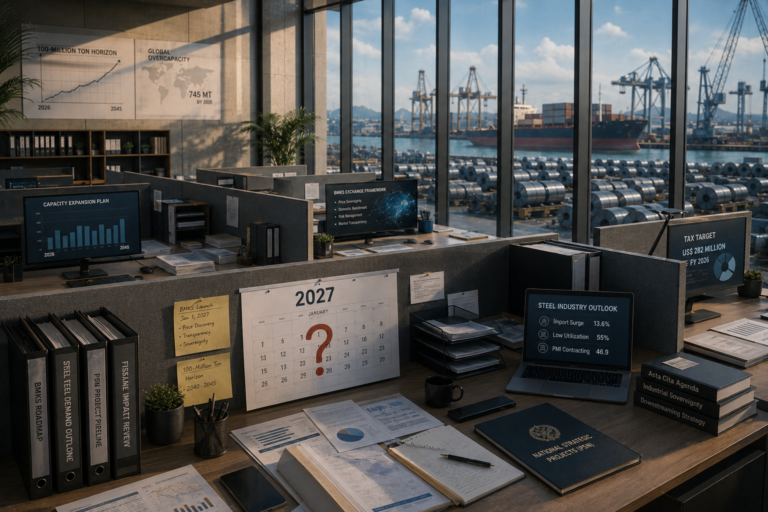
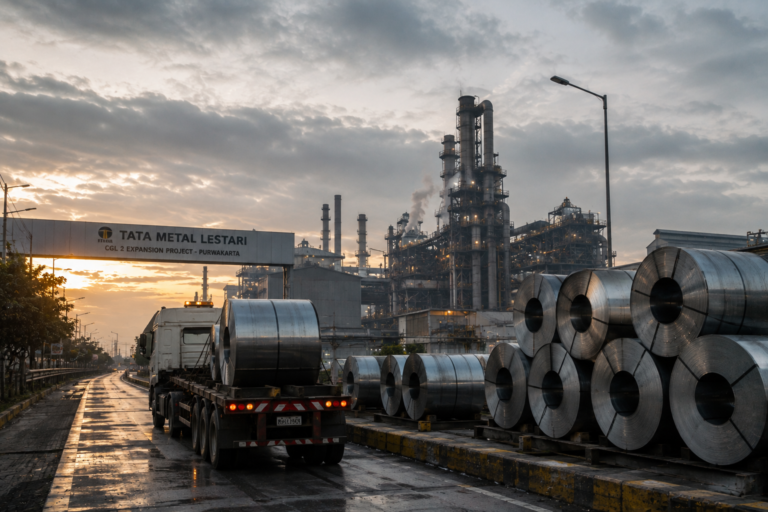
IKN, the 3-million-homes program, 44 new industrial estates, and the ever-extending Trans-Java toll network — all of these projects share one common requirement: steel. Akbar Johan, CEO of Krakatau Steel, has put forward a projection that is both surprising and logical: Indonesia will need 100 million tonnes of steel by 2045. Compared to current national consumption of around 14–16 million tonnes per year, that figure represents a sevenfold increase over two decades — a target that demands structural transformation across the entire national steel industry ecosystem.
More pressing is the near-term picture: PSN requirements for next year alone are estimated at 21 million tonnes. With current domestic production capacity still far short of that figure, this gap represents both an opportunity and a threat — an opportunity for producers who are ready, a threat to supply chains that are not moving fast enough.
IKN and PSN: How Much Steel Is Needed
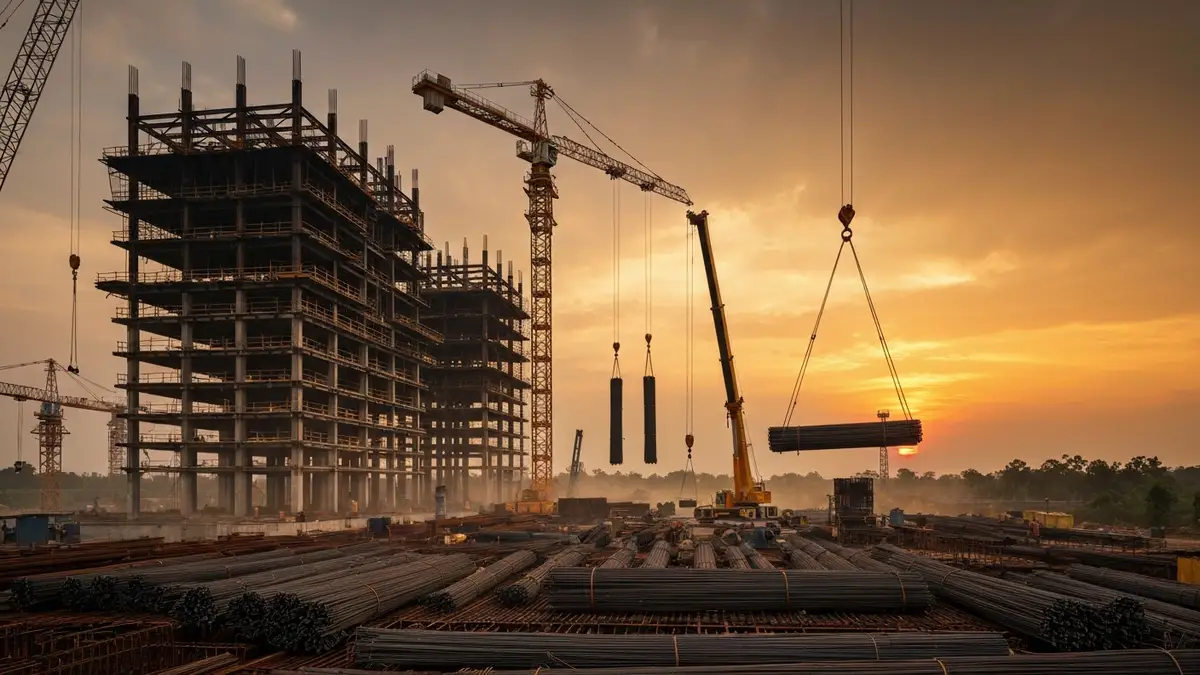
The Nusantara Capital City (IKN) is the largest infrastructure project in Indonesia’s modern history. Each phase of construction requires approximately 1 million tonnes of steel — from rebar for government building foundations, to structural steel for bridges and overpasses, to specialty steel for underground utility installations.
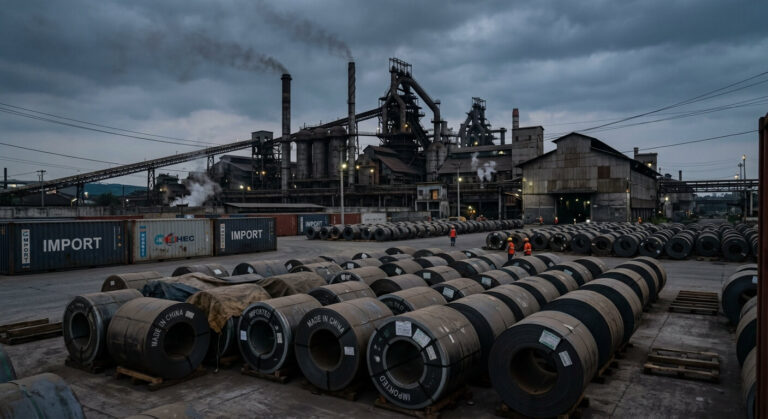
The domestic content requirements (TKDN) mandated in PSN projects theoretically prioritize supply from domestic producers. However, implementation on the ground still faces challenges: not all product specifications required are available from local producers, and logistical bottlenecks from the steel plant in Cilegon to construction sites in Kalimantan add significant cost and time.
“Our needs actually, in a year… next year we will need — and even perhaps 100 years from now, by 2045 — we need 100 million tonnes.”
— Akbar Johan, CEO, PT Krakatau Steel, Indonesia Business Post
Akbar Johan’s statement is not merely a corporate projection — it is a policy argument directed at the government and investors: if Indonesia is serious about meeting its own steel needs by 2045, investment in production capacity must begin now, not when demand has already arrived.
The 3-Million-Homes Program: The Next Pillar of Steel Demand
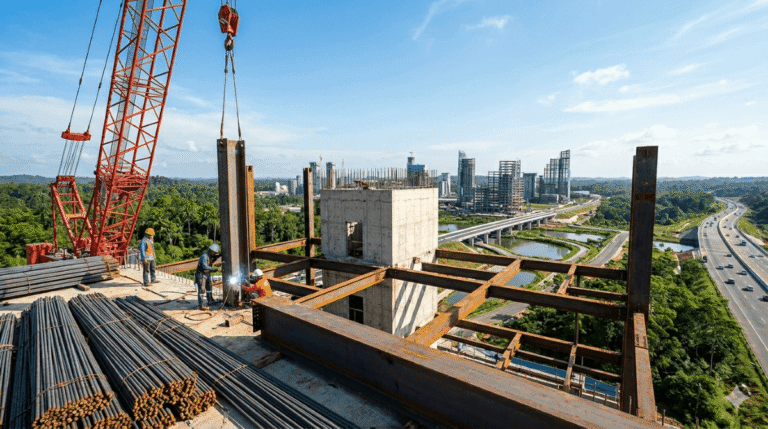
Beyond the IKN megaproject, the 3-million-homes-per-year program that is a priority of the Prabowo administration is a catalyst for steel demand that is more geographically distributed and more sustainable over the long term. A single modest Type-36 home requires approximately 1–2 tonnes of steel in various forms — rebar, lightweight steel for roof trusses, pipes, and other structural components.
If the program runs on target, steel demand from the housing sector alone could reach 3–6 million tonnes per year — a consistent and predictable baseline demand, unlike the episodic nature of megaproject demand. However, there is a critical variable: the projected 30% increase in material costs is expected to squeeze program affordability, particularly for mid-scale contractors with limited access to capital.
According to IMARC Group, Indonesia’s steel market is projected to grow significantly throughout this decade, with the construction sector as the primary driver. Data from Gunung Raja Paksi also confirms that import pressure remains the primary challenge to be overcome for domestic demand growth to truly benefit local producers.
44 New Industrial Estates and the 12.9% Leap
Beyond physical construction, manufacturing industry growth driven by 44 new industrial estates being developed outside Java will also serve as a structural source of steel demand. These estates require steel infrastructure for factories, warehouses, utility facilities, and transport connections.
“Growth in this sector is insane — up to 12.9% — if you’re still camping out in Java… you’re going to miss the biggest slice of the pie.”
— Narrator, SMS Perkasa YouTube
This 12.9% construction sector growth projection places Indonesia among the markets with the strongest momentum in Southeast Asia — far exceeding the regional average. For contractors and material suppliers still concentrated in Java, the message is clear: the greatest opportunity now lies beyond the island that has long been the center of gravity for industry.
This geographic diversification demands non-trivial adaptation of the steel supply chain. Distribution to locations in Kalimantan, Sulawesi, and Papua requires a stronger logistics network, larger buffer stocks in regional warehouses, and the technical capability to handle diverse project specifications.
From the 2045 Vision to 2026 Execution
The distance between the 100-million-tonne vision and current production realities requires very specific planning. Several critical steps that need to be taken in the next 12–24 months include: accelerating permits for new production capacity, strengthening steel logistics infrastructure outside Java, expanding product certifications to meet strategic project specifications, and building an integrated downstream steel components supplier ecosystem.
Nippon Steel, as a strategic partner to Krakatau Steel, has stated its commitment to supporting Indonesia’s production capacity development in their 2025 investor report. Technical support from this global partner, combined with Danantara’s financial capacity, should provide a solid foundation for the acceleration required.
The 100-million-tonne vision for 2045 will only be realized if the foundations built in 2026 are strong enough — and fast enough. Indonesia’s steel market will not wait for anyone still weighing their options from the sidelines.