Indonesia's 100 Million Ton Steel Ambitions 2026 (1)

BlueScope & Steel Dynamics Strategic Outlook is a 13–17.5% ROIC Trajectory

The global steel landscape is currently defined by a sharp decoupling of domestic pricing from traditional benchmarks, driven by aggressive infrastructure funding and a structural shift toward regionalized manufacturing. As hot-rolled coil (HRC) prices breached the $1,000 per ton milestone in early 2026, industry leaders such as Steel Dynamics and BlueScope Steel are pivoting their capex strategies to capture “green premiums” and maximize EBITDA margins in an environment of escalating input costs (https://www.financialcontent.com/steel-prices-breach-1000-milestone-as-nucor-leads-market-hike). This report analyzes the ROI projections for major steel players, focusing on the impact of EAF capacity expansion, scrap utilization rates, and the critical competition for grid capacity between industrial facilities and AI data centers.

Mandatory Executive Insights

The following insights from industry CEOs underscore the current momentum in the sector:

  • Mark Millett, Chairman and CEO of Steel Dynamics: “The improvement in earnings was driven by record steel shipments combined with higher steel prices. Our three-year after-tax return-on-invested capital of 13 percent is a testament to our ongoing high-return capital allocation execution.” (https://www.prnewswire.com/news-releases/steel-dynamics-reports-first-quarter-2026-results-302738340.html)
  • Mark Millett, Chairman and CEO of Steel Dynamics: “Underlying steel demand strengthened during the first quarter 2026, as customer orders rebounded and backlogs increased… we are seeing an improved steel market environment, supported by domestic trade actions, manufacturing onshoring, infrastructure program funding, and the increasing regionalization of supply chains in the United States.” (https://www.prnewswire.com/news-releases/steel-dynamics-reports-first-quarter-2026-results-302738340.html)
  • Mark Millett, Chairman and CEO of Steel Dynamics: “Building on our strong positions in steel, we are expanding into high recycled-content aluminum… backed by a performance-based culture and a proven ability to develop and operate cost-efficient, high-margin mills, we are well positioned to deliver attractive long-term value through this expansion.” (https://www.prnewswire.com/news-releases/steel-dynamics-reports-first-quarter-2026-results-302738340.html)

North American Resilience and Steel Dynamics’ Production Statistics

Steel Dynamics (STLD) reported record quarterly performance for Q1 2026, with steel shipments reaching 3.6 million tons (https://www.prnewswire.com/news-releases/steel-dynamics-reports-first-quarter-2026-results-302738340.html). The company’s operating income for steel operations surged by 73% sequentially to 557million,supportedbyanaverageexternalproductsellingpriceof∗∗1,193 per ton**, compared to a ferrous scrap cost melted at $396 per ton (https://www.prnewswire.com/news-releases/steel-dynamics-reports-first-quarter-2026-results-302738340.html).

The broader U.S. market reflected this strength, with raw steel production estimated at 1,848,000 short tons for the week ending April 18, 2026 (https://www.steelmarketupdate.com/2026/04/20/aisi-raw-steel-production-strengthens-further/). This output represents a 9% increase since the beginning of the year, pushing the mill capability utilization rate to 80.0%, the highest level since August 2024 (https://www.steelmarketupdate.com/2026/04/20/aisi-raw-steel-production-strengthens-further/). These metrics suggest that domestic mills are effectively maintaining “pricing discipline,” choosing to curtail production where necessary to keep the supply side tight and maintain a high price floor (https://www.financialcontent.com/steel-prices-breach-1000-milestone-as-nucor-leads-market-hike).

Asia Steel Infrastructure Demand: Indonesia and the CPA Segment

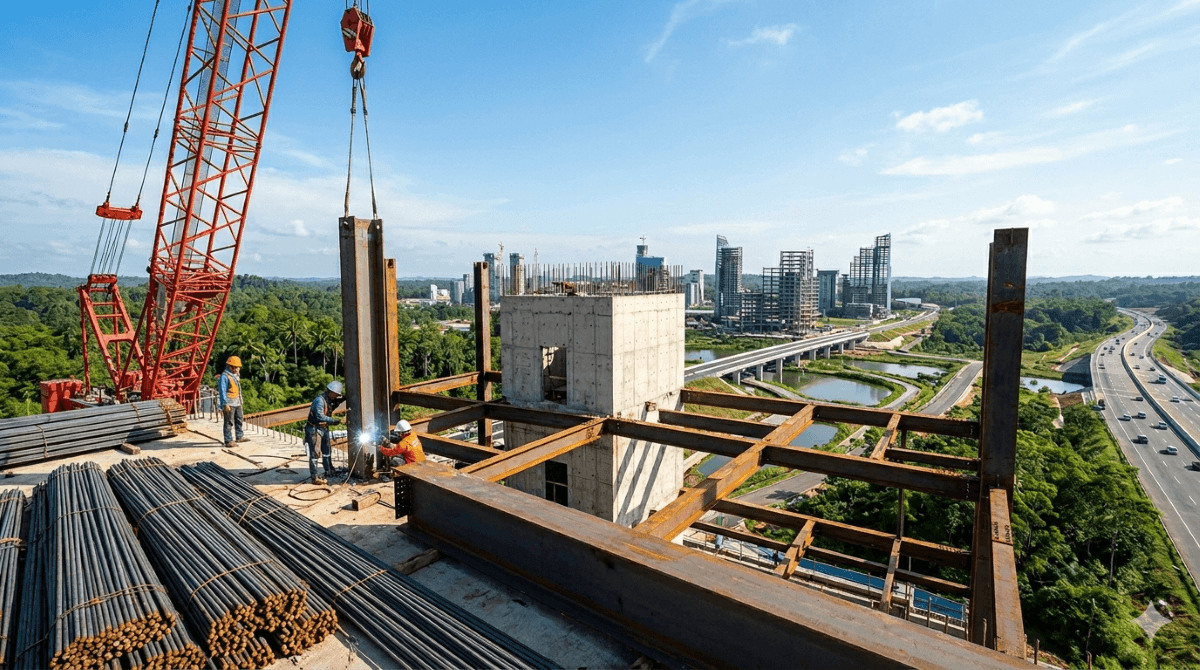
In the Asia-Pacific region, BlueScope’s Coated Products Asia (CPA) segment serves as a primary engine for growth, particularly as Indonesia steel infrastructure demand accelerates. For 1H FY2026, the CPA segment reported an Underlying EBIT of $96.7 million, a 40% increase over the previous year (https://www.bluescope.com/results-for-announcement-to-the-market-and-1h-fy2026-half-year-report/). Indonesia specifically contributed $138.1 million in sales revenue, part of a diversified geographic portfolio that includes Thailand, Malaysia, and Vietnam (https://www.bluescope.com/results-for-announcement-to-the-market-and-1h-fy2026-half-year-report/).

The CPA segment achieved a Return on Invested Capital (ROIC) of 17.5%, driven by strong project and retail segments (https://www.bluescope.com/results-for-announcement-to-the-market-and-1h-fy2026-half-year-report/). However, regional competition from excess capacity remains a risk, tempered by BlueScope’s focus on premium branded products like COLORBOND and ZINCALUME (https://www.bluescope.com/results-for-announcement-to-the-market-and-1h-fy2026-half-year-report/).

Asia Steel Energy Costs and the AI Grid Challenge

A critical headwind for Asian and domestic producers alike is the volatility in energy intensity (GJ/tonne) and cost escalation. Natural gas prices at the Henry Hub have trended 15% higher than 2024 averages, necessitating higher finished goods prices to maintain existing margins (https://www.financialcontent.com/steel-prices-breach-1000-milestone-as-nucor-leads-market-hike).

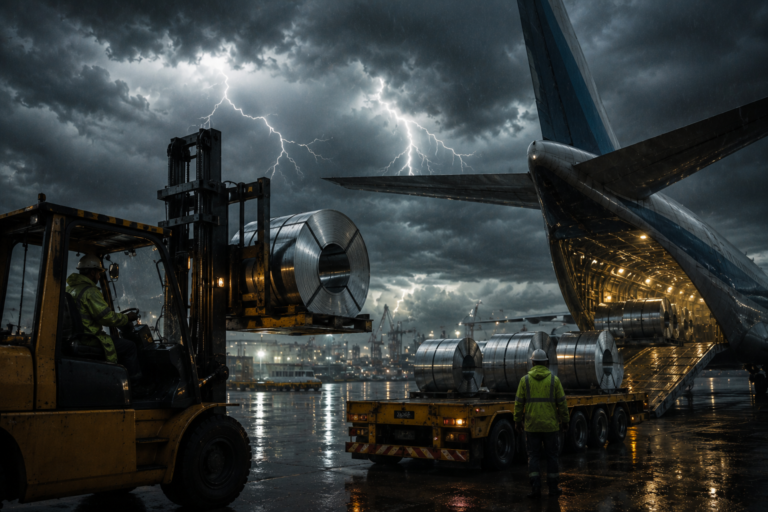
Furthermore, the rise of the AI data center has introduced a new competitor for industrial electricity. Steel production via Electric Arc Furnaces (EAF) is highly energy-intensive, and the acceleration of data center construction is actively competing with mills for limited grid capacity (https://www.financialcontent.com/steel-prices-breach-1000-milestone-as-nucor-leads-market-hike). In early 2026, several mills were forced to curtail production during severe weather events to save the grid, a dynamic that further constricts supply and stabilizes the $1,000+ price point (https://www.financialcontent.com/steel-prices-breach-1000-milestone-as-nucor-leads-market-hike).

ROI Projections: 2026–2030 Strategic Timelines

Investors are tracking several high-timeline growth initiatives that promise sustained ARR and EBIT uplift:

  1. BlueScope FY2030 Growth Plan: BlueScope is targeting $500 million in annual incremental earnings by the end of FY2030 through a combination of North Star debottlenecking, metal coating expansion in Western Sydney, and the adoption of next-generation ironmaking technology (https://www.bluescope.com/results-for-announcement-to-the-market-and-1h-fy2026-half-year-report/).
  2. Cost and Productivity Improvement: The company is on track to deliver a $200 million net annual earnings improvement in FY2026, with $190 million already delivered by 1H FY2026 through optimization of direct manufacturing and raw materials sourcing (https://www.bluescope.com/results-for-announcement-to-the-market-and-1h-fy2026-half-year-report/).
  3. Steel Dynamics EAF and Aluminum ROI: STLD’s 13% after-tax ROIC is expected to be bolstered by the commissioning of the Columbus, Mississippi aluminum flat rolled products mill, with three cold mills and CASH lines scheduled to reach full operational status by late 2026 (https://www.prnewswire.com/news-releases/steel-dynamics-reports-first-quarter-2026-results-302738340.html).

Technological Evolution: DRI Yields and EAF Capability

To combat rising energy costs and emissions regulations, mills are prioritizing DRI (Direct Reduced Iron) yield improvements and the transition to EAF technology. BlueScope’s NeoSmelt Joint Venture, involving Rio Tinto and BHP, is investigating DRI-ESF technology using Australian Pilbara ores to provide a lower-carbon bridge for the Port Kembla Steelworks (https://www.bluescope.com/results-for-announcement-to-the-market-and-1h-fy2026-half-year-report/). In New Zealand, the installation of an Electric Arc Furnace (EAF) is entering cold commissioning, a project expected to reset the operating model by improving demand response capability and lowering emissions intensity (https://www.bluescope.com/results-for-announcement-to-the-market-and-1h-fy2026-half-year-report/).

Conclusion: The “Fortress America” Pricing Equilibrium

The breach of the $1,000 milestone for HRC marks the definitive end of the “cheap commodity” era. The combination of a 50% Section 232 tariff wall, massive federal infrastructure spending, and the energy demands of the AI revolution has created a high-cost but stable industrial landscape (https://www.financialcontent.com/steel-prices-breach-1000-milestone-as-nucor-leads-market-hike). For steel mill executives and institutional investors, the primary metric of success through 2028 will be the ability to maintain high capacity utilization while navigating the volatile intersection of energy costs and regional infrastructure demand.

Similar Posts