EU Regulations Motivate Indonesia’s Pivot to Green Steel
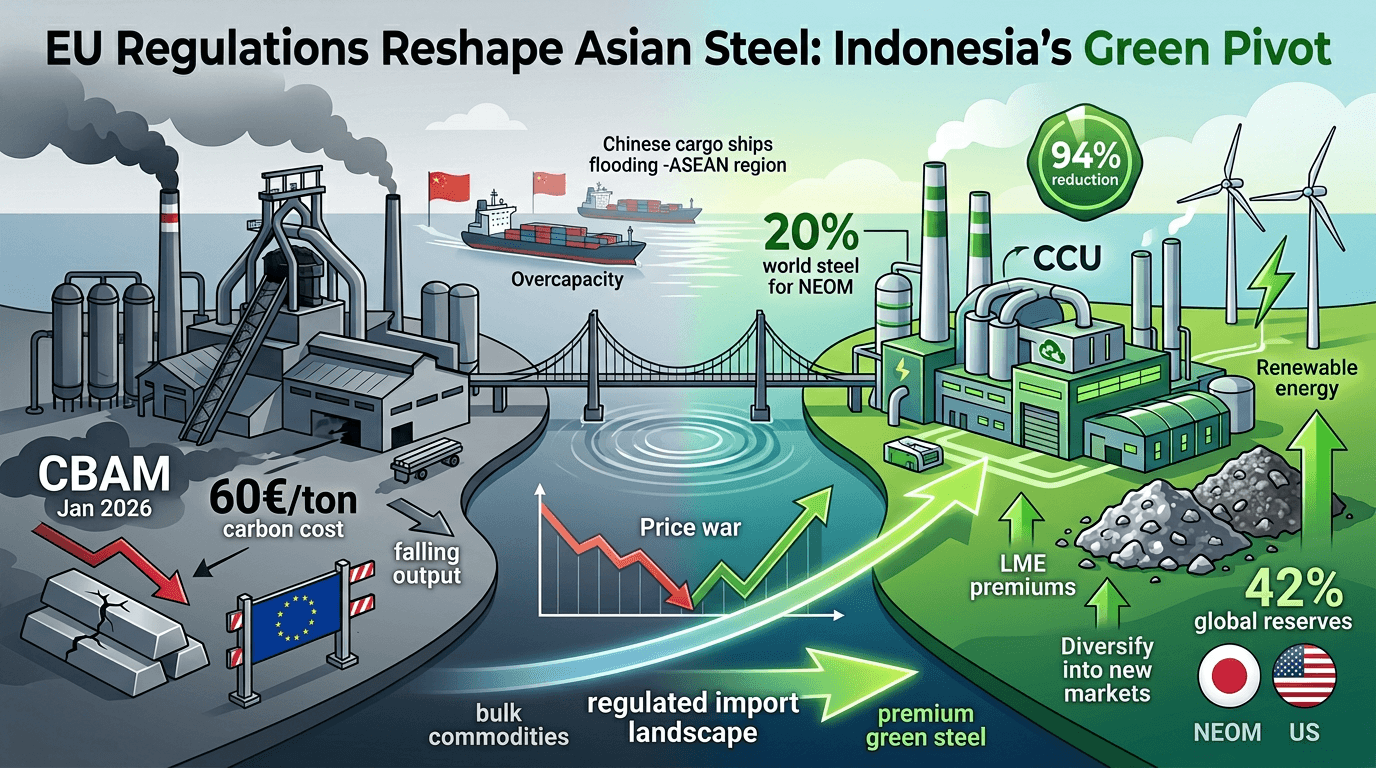
Europe’s tightening regulations and plummeting steel output are rippling across Asia, compelling Indonesian producers to embrace sustainability and rethink export paths. This “regulated import landscape” born from the EU’s Carbon Border Adjustment Mechanism (CBAM) is accelerating a shift from bulk commodities to premium green steel. As barriers rise, Southeast Asia faces both fierce competition and fresh opportunities in the global transition.
Intensifying Competition Across Asia
EU import protections—like surging rebar prices in Germany and Italy alongside stricter quotas—are blocking traditional pathways for Asian steelmakers. Chinese overcapacity, squeezed by weak domestic demand and EU hurdles, is flooding ASEAN markets instead.
- This redirection sparks price wars, with Indonesia’s manufacturers pressured by China’s scale-driven undercutting.
- The result? A “race to the bottom” that boosts regional investment but strains local players.
“Redirected oversupply is transforming Southeast Asia into a battleground for steel dominance.”
CBAM’s Sting for Indonesian Exporters
CBAM’s full rollout on January 1, 2026, slaps carbon costs on high-emission imports, demanding verified emissions data from exporters. “Trustworthiness and preparedness are emerging as value drivers” in this new era, putting non-compliant Indonesian firms at risk.
Without low-carbon proof, producers could face 60 euros per ton in added costs—mirroring Turkey’s plight—eroding EU competitiveness and buyer trust. Forward-thinking mills are racing to certify, turning compliance into a market edge.
Accelerating Indonesia’s Green Steel Shift
Global access now hinges on sustainability, spurring Indonesia’s urgent green transition. The Indonesian Iron and Steel Industry Association (IISIA) leverages World Bank grants for cleaner tech adoption.
- Pioneering efforts include Carbon Capture Utilization (CCU) at sites like PT Petrokimia Gresik, slashing emissions by 94%.
- Low-carbon output positions Indonesia for London Metal Exchange (LME) premiums, elevating steel from commodity to “premium low carbon assets.”
Nickel Ties Bind EU and Indonesia
Indonesia’s dominance—holding 42% of global nickel reserves—links it directly to EU dynamics via stainless steel chains. As the key feedstock for Chinese producers, its nickel sets a global price floor.
CBAM squeezes Chinese margins, prompting Indonesia to impose levies on low-grade nickel pig iron. This curbs oversupply, boosts cleaner battery materials, and fortifies the stainless supply loop.
Diversifying Markets for Resilience
With 94% of nickel once funneled to a slowing China in early 2025, Indonesia eyes new horizons like the US and Middle East. Saudi Arabia’s NEOM megaproject, potentially devouring 20% of world steel, favors verified low-carbon sources.
“Strategic diversification is key to economic resilience,” as industry leaders emphasize.
Amid policy flux and high yields, Domestic Direct Investment (DDI) bolsters the metals sector. The EU’s bold regulatory pivot is no mere hurdle—it’s a catalyst propelling Indonesia from bulk supplier to certified green powerhouse in the energy transition. By prioritizing verification and innovation, Asian steelmakers can thrive in this evolving landscape.