
The Sovereignty Pivot: Can Indonesia’s 2027 Commodity Exchange Anchor the 100-Million Ton Horizon?
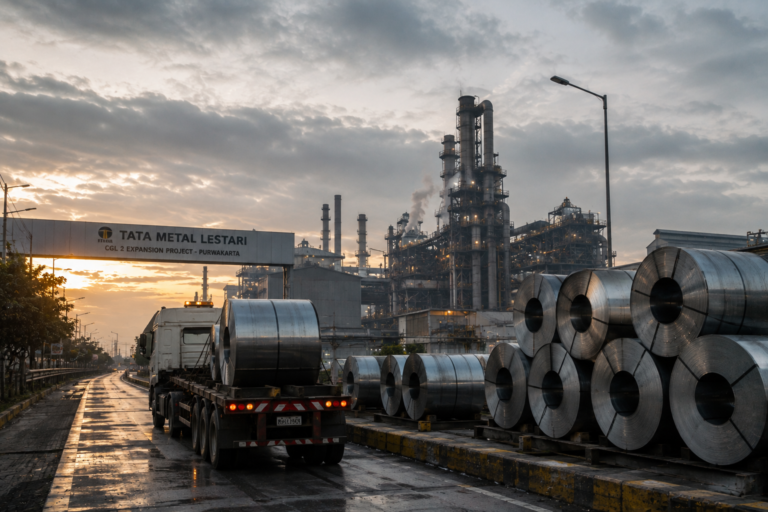
Indonesia’s steel industry is executing a high-stakes transition. Moving away from a defensive posture defined by a 13.6% surge in import volumes, domestic stakeholders are pivoting toward structural self-reliance. This proactive strategy anchors on the upcoming Strategic Mineral and Commodity Exchange (BMKS) and aggressive capacity scaling linked to National Strategic Projects (PSN), charting a clear course toward a 100-million-ton consumption horizon by 2040–2045.
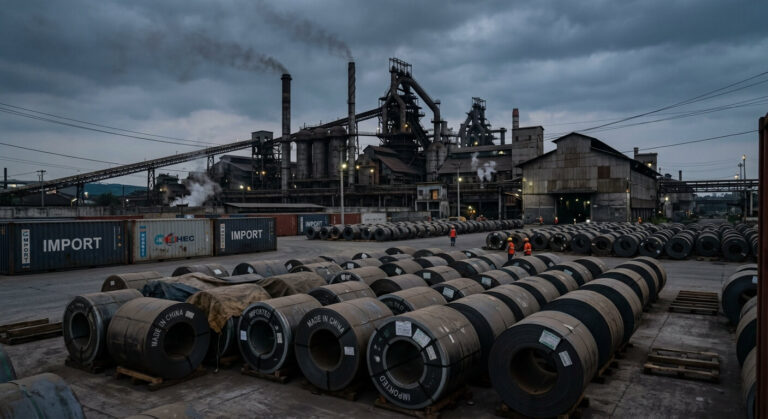
The Sovereignty Gap: Reclaiming the Market from a 13.6% Import Surge
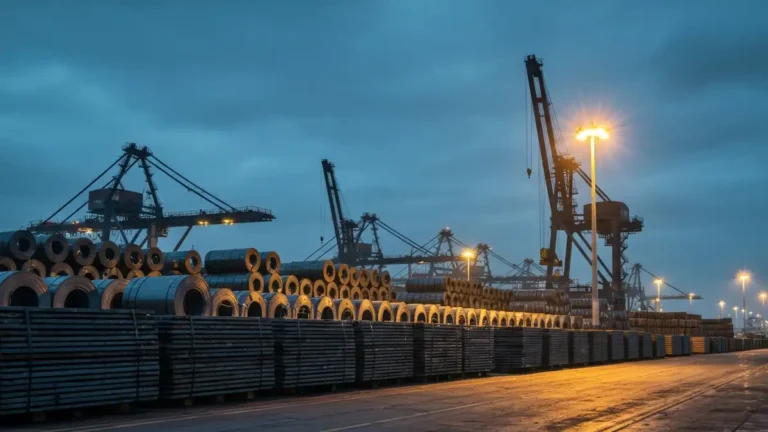
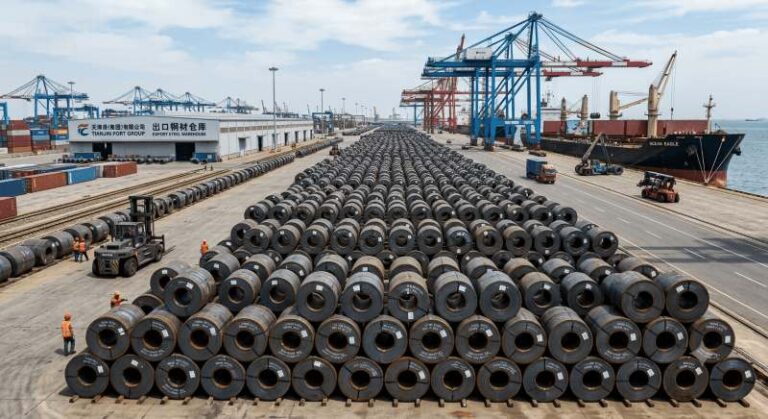
The national steel sector faced a sluggish first half of 2026, marked by a 7.48% decline in export volumes and an influx of 7.94 million tons of foreign steel. This wave of imports exposed deep vulnerabilities as local mills struggled against global overcapacity, which is projected to reach 745 million tons by 2028. To reverse this trend, domestic manufacturers are accelerating structural adjustments, ensuring that local supply chains are fully optimized to capture demand from the infrastructure and manufacturing sectors rather than yielding ground to foreign oversupply.
“Banyak negara cenderung mengamankan pasar domestiknya dengan berbagai instrumen yang tetap sesuai dan tidak bertentangan dengan ketentuan WTO,” noted Harry Warganegara, Executive Director of IISIA.
Price Sovereignty: The 2027 Roadmap for the BMKS Commodity Exchange
A critical pillar of this industrial pivot is the launch of the Strategic Mineral and Commodity Exchange (BMKS), slated by the OJK for January 1, 2027. Historically, domestic mills have suffered from volatile raw material input costs, compounded by external shocks like $131 Newcastle coal and $94 Brent crude. The BMKS exchange aims to establish transparent domestic price benchmarks, eliminating speculative pricing distortions and providing local producers with a predictable economic foundation to plan their long-term manufacturing operations.
The 100-Million Ton Horizon: Aligning PSN Projects with Industrial Self-Sufficiency
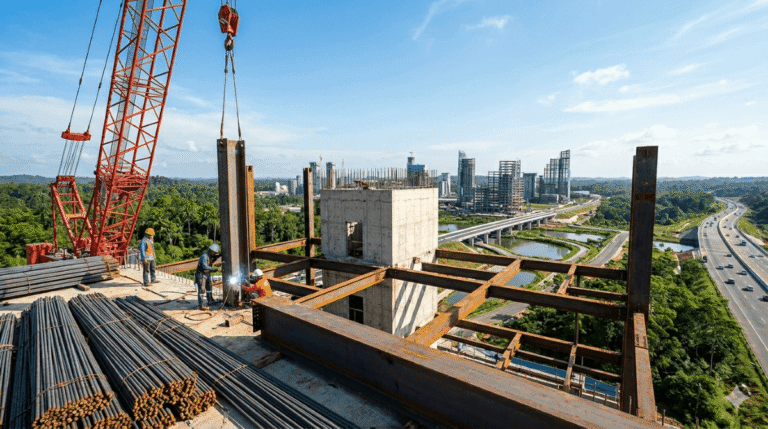
Looking past immediate headwinds, the industry is aligning its multi-year expansion cycle with President Prabowo Subianto’s Asta Cita agenda. Driven by National Strategic Projects, Indonesia’s baseline steel consumption is targeted to scale from 23 million tons toward an ambitious 32 million tons annually through 2029, paving the way for the ultimate 100-million-ton vision. State-backed entities like PT Krakatau Steel are leading this charge, upgrading production lines to meet the stringent specifications required by modern transport, energy, and maritime sectors.
“The future steel industry will depend heavily on how well stakeholders share knowledge, foster innovation, strengthen partnerships, and build mutual trust,” emphasized Akbar Djohan, Chairman of IISIA.
Fiscal Headwinds: Balancing the $282M Tax Mandate with Low Plant Utilization
Despite long-term structural gains, current operational metrics present a difficult balancing act. With factory utilization rates stalled near 55% and manufacturing PMI contracting at 46.9, domestic mills are absorbing severe financial pressures. Compounding this environment is a stringent $282 million government tax revenue target specifically tailored to the sector. Navigating this multi-front squeeze—where heavy fiscal burdens intersect with the heavy capital investments required to bypass international “melt and pour” and CBAM barriers—will determine whether Indonesia successfully transforms its structural potential into lasting industrial sovereignty.