The Fiscal-Industrial Squeeze: Balancing SEA Hub Ambitions with a $282M Tax Target
Indonesia’s aspirations to emerge as the premier “Steel Hub” of Southeast Asia face a complex macroeconomic reality. While policymakers and industry leaders eye ambitious long-term consumption targets and National Strategic Projects (PSN), local manufacturers find themselves caught in a high-pressure environment. Driven by a contracting Purchasing Managers’ Index (PMI) and a substantial government tax target, the domestic steel sector must navigate severe fiscal and operational headwinds to sustain its growth trajectory.
The Hub Paradox: Chasing Regional Leadership Amidst Manufacturing Contraction
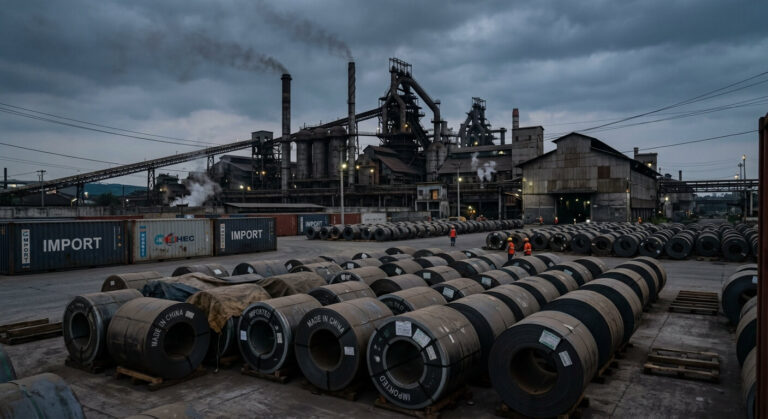
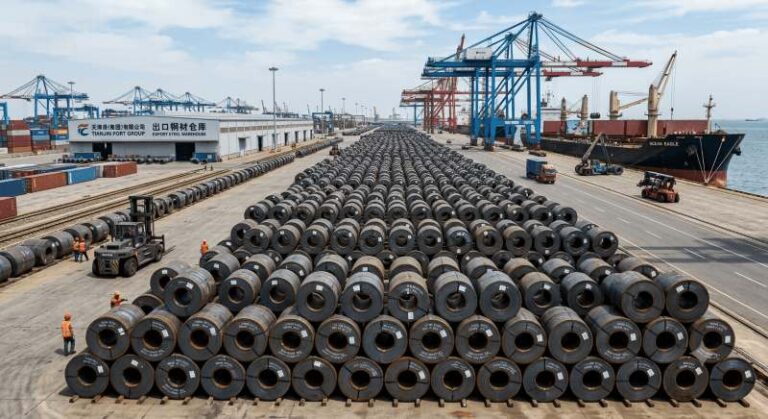
Indonesia holds a massive long-term opportunity to anchor regional steel demand, with projected annual consumption targeted to climb significantly over the coming years. Major stakeholders emphasize that the nation is well-positioned to serve as an investment and growth engine for the region. However, this macro-level ambition contrasts sharply with immediate performance indicators. With Indonesia’s manufacturing PMI registering at 46.9, indicating ongoing contraction, the industry must weather sluggish domestic demand and growing import pressures while striving for regional leadership.
“Indonesia has a massive opportunity to emerge as an investment center and a growth hub for the steel industry in the Southeast Asian region,” noted Akbar Djohan, Chairman of IISIA.
Fiscal Reality: Analyzing the Impact of the $282 Million Tax Target
Compounding these operational challenges is a stringent fiscal mandate: the government has established a $282 million tax revenue target specifically tailored to the steel sector. This heavy tax requirement arrives during a period of delicate economic recovery. For independent mills and large-scale producers alike, balancing mandatory fiscal contributions with capital-intensive operational expenses creates an intense squeeze on liquidity, threatening to stall discretionary investments required for modernization and technological upgrades.
Expansion Targets: Krakatau Steel’s 2026 Operational Blueprint for PSN
Despite contracting manufacturing activity, state-backed producers and key players like PT Krakatau Steel are pressing forward with capacity expansion to support government-backed initiatives. These efforts are closely tied to National Strategic Projects and President Prabowo’s Asta Cita priority programs, which prioritize industrial independence and downstreaming. Maintaining this momentum requires careful coordination between corporate debt management and state budgetary frameworks as the government prepares its fiscal parameters for upcoming budget cycles.
“The national steel industry faces increasingly fierce competition due to mounting pressure from imported steel,” warned Harry Warganegara, Chairman of IISIA and Bakrie & Brothers.
Global Headwinds: Overcapacity, CBAM, and the ‘Melt and Pour’ Challenge
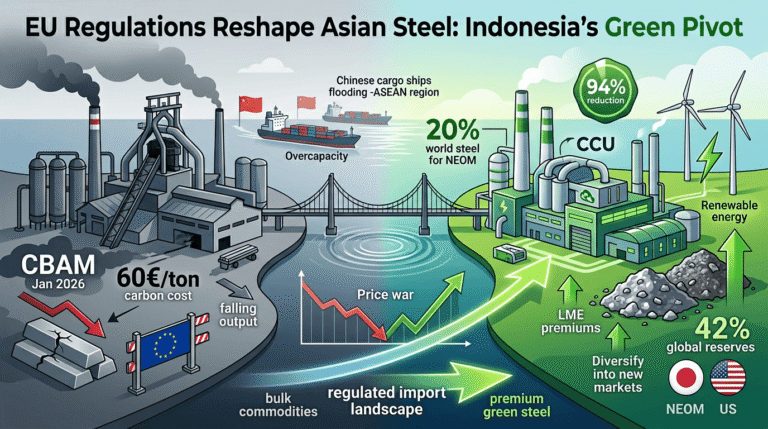
Beyond domestic fiscal pressures, Indonesian exporters face a rising wall of international trade barriers. With global steel overcapacity projected to reach monumental levels, developing markets remain vulnerable to export diversion. Furthermore, stricter enforcement of “Melt and Pour” provenance rules, Carbon Border Adjustment Mechanisms (CBAM), and anti-dumping filters are reshaping access to lucrative Western markets. To survive this multi-front squeeze, the national steel sector must enhance supply chain transparency, improve energy efficiency, and secure targeted state support to protect its industrial foundation.