The Galvanizing Gambit: CGL 2 Expansion as the H2-2026 Import Counter-Move
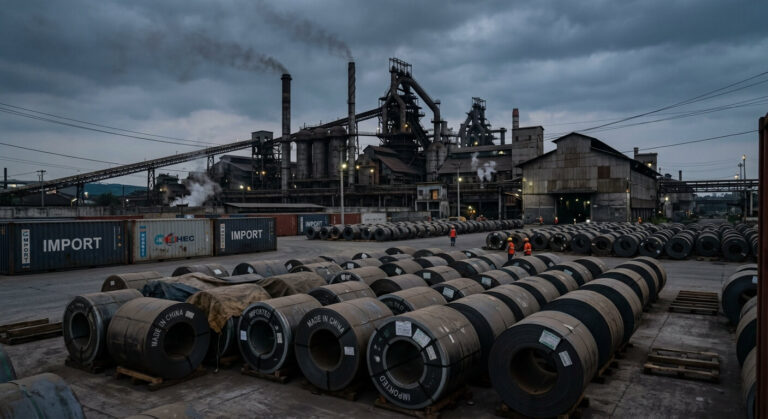
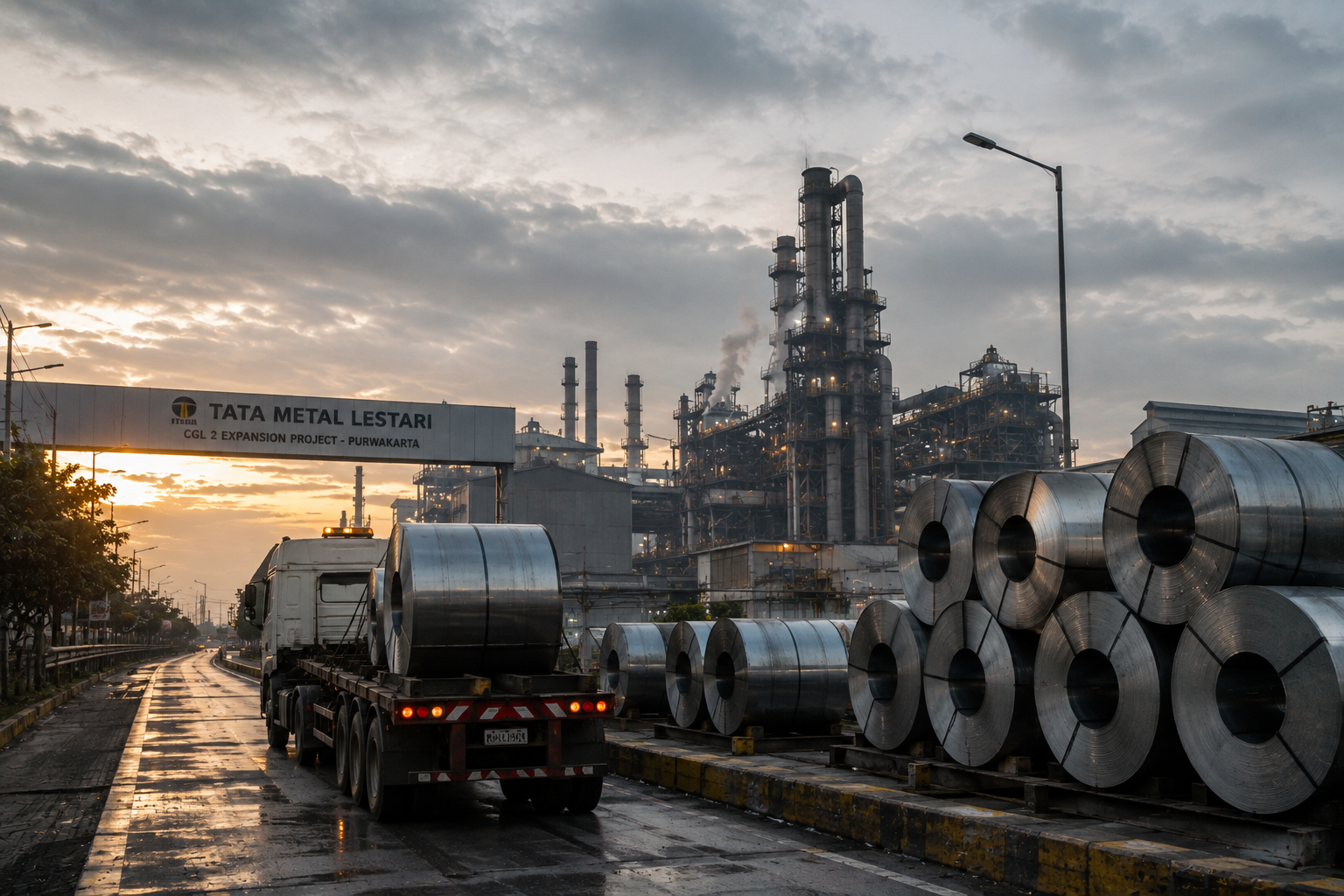
The Indonesian steel landscape is undergoing a structural shift. While headlines frequently focus on market pressures and facility closures, strategic industrial investments are pressing forward to capture market share. A prime example is the groundbreaking of PT Tata Metal Lestari’s Continuous Galvanizing Line (CGL) 2 facility in Purwakarta, signaling a proactive move by domestic mills to absorb the demand being vacated by declining Chinese imports in the latter half of 2026.
The Production Inversion: Capitalizing on the H2-2026 Import Decline
National steel production has surged nearly 98.5% over the past five years, climbing from a baseline of just 8.5 million tons in 2019. This expansion is altering the supply-demand balance as the industry looks to close a long-standing industrial deficit with China. With anti-dumping duties tightening the flow of foreign material, domestic producers are seizing the opportunity to supply local downstream sectors.
The Purwakarta Blueprint: CGL 2 and the Asta Cita Mandate
Situated in West Java, the expansion of the Purwakarta facility directly aligns with national industrial goals, including President Prabowo’s Asta Cita priority programs focused on industrial independence and downstreaming. Ministry of Industry regulations—such as Ministerial Regulations Nos. 23 and 24 of 2026—mandate strict SNI compliance for zinc and aluminum-zinc coated steel, setting a high standard for quality that new facilities are engineered to meet.
“Through this project, of course, it will increase national competitiveness, create job creation, and also local economic empowerment,” noted Dodiet Prasetyo, Director of Metal Industry at Kemenperin.
Pricing Parity: Can $500 Domestic Steel Outmuscle Anti-Dumping Duties?
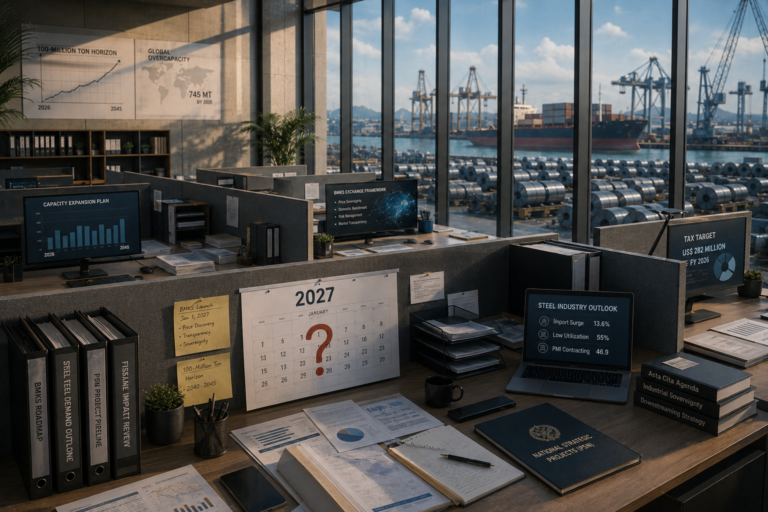
Cost dynamics are heavily influencing procurement decisions across the archipelago. With pre-duty Chinese Hot-Rolled Coil (HRC) hovering around $485 per ton FOB against domestic HRC priced near $500 per ton FOB, anti-dumping measures are effectively narrowing the price gap. While market analysts note that certain high-specification HRC grades will still require targeted imports, domestic mills are increasingly positioned to fulfill broader commercial requirements.
“Industri baja nasional memiliki peran strategis dalam upaya mendukung pembangunan infrastruktur, pengembangan teknologi, serta penguatan industri turunan seperti permesinan, otomotif, galangan kapal, dan sektor energi,” emphasized Agus Gumiwang Kartasasmita, Minister of Industry.
Future-Proofing Utilization: Balancing SNI Compliance with New Capacity
Achieving long-term industrial resilience requires a careful balance between scaling output and maintaining regulatory oversight. As facilities like CGL 2 come online, optimization of policies such as the Certain Natural Gas Price (HGBT) will play a critical role in keeping operational costs competitive. By coupling modern production capacity with strict standards compliance, Indonesia’s domestic steel sector is successfully turning import vulnerabilities into an engine for sustainable industrial growth.